Some things are hard to say out loud. A letter gives them a place. A seed letter goes one step further: once it is written, it can be planted, and what you wrote becomes part of something that grows.
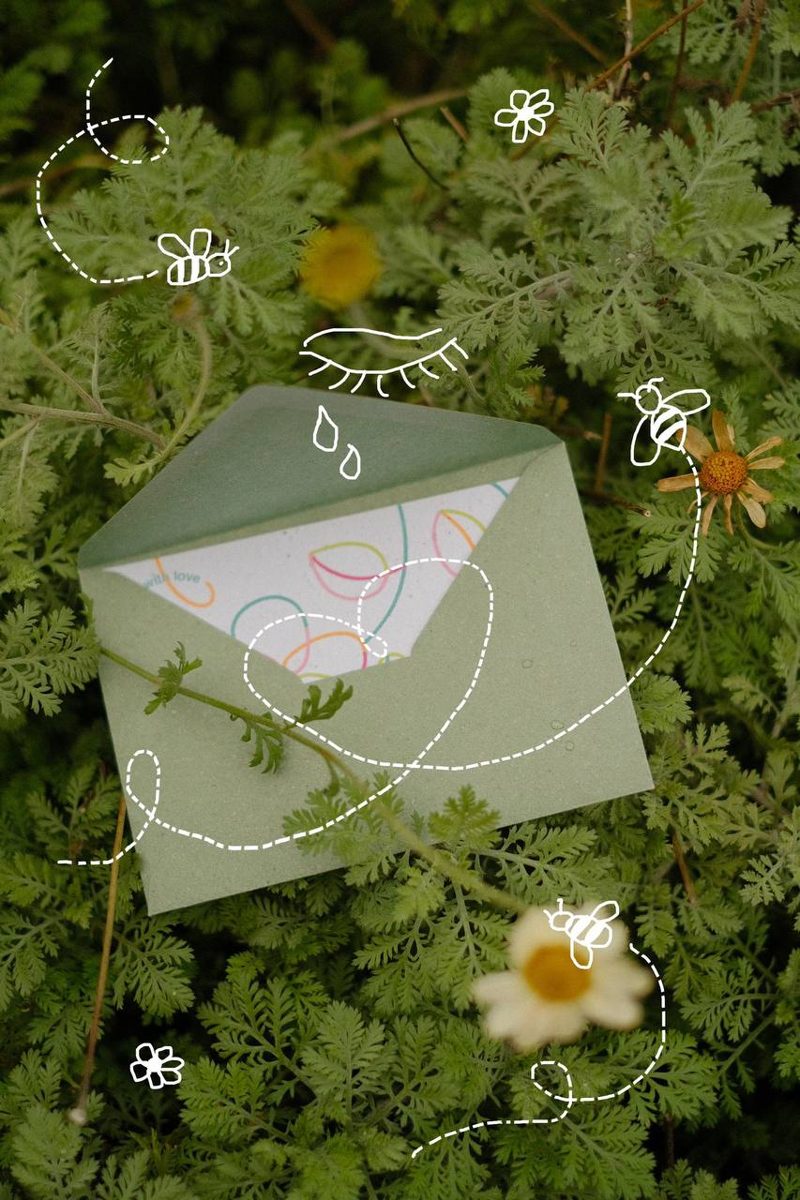
Each MIMATIS seed letter is handcrafted from paper with poppy seeds set into it. The card carries a simple line drawing of flowers and leaves in turquoise, pink, orange and green, and three short lines: to write is to remember, to plant is to continue, and for a memory that deserves to bloom. It comes in a soft green envelope.
Why poppies
Poppies have been a flower of remembrance for more than a century. They are also generous plants. They grow easily, they flower in late spring and early summer, and they drop their own seed. Where poppies have flowered once, they often return the next year, and the year after, without being planted again.
That is what makes them right for a letter to a baby who died. You plant the letter once. The flowers can come back every year.
How to plant a seed letter
- Write first. Use a pen or pencil. Write as much or as little as you want: your baby’s name, a date, a few words, a whole letter.
- Choose a place. A garden bed, a balcony pot or a window box, somewhere with plenty of light.
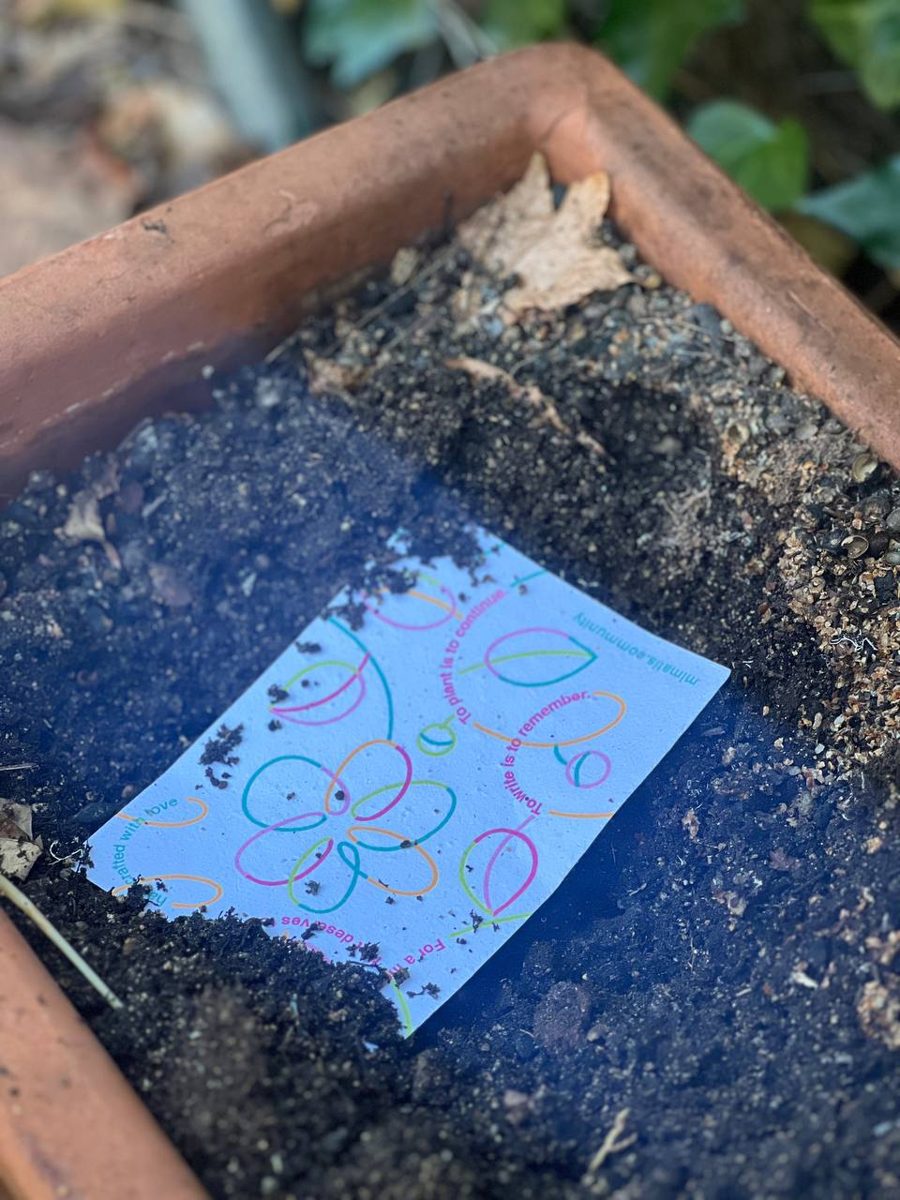
- Plant it close to the surface. Lay the letter flat on the soil and cover it with only a thin layer, a few millimetres. Poppy seeds need light to start growing.
- Keep it damp. Water gently so the paper stays moist while it softens and the seeds wake. The paper breaks down into the soil.
- Wait. Poppies sown in autumn often flower the following late spring. Sown in spring, they can flower that summer.
A letter for the years that come later
Grief after the loss of a baby does not end on a set date. It changes shape. The due date, the first birthday that never happened, the year your baby would have started school: these days arrive whether or not anyone else remembers them. Many parents describe their baby as still part of their lives ten, twenty and thirty years later.
A seed letter does not have to be written in the first weeks. It can be written on an anniversary, on 15 October, on a birthday, or on an ordinary day when you want to say something. Some families write one every year. Each time, the flowers that follow are new, and so is what you wrote.
And when poppies return on their own in early summer, there is something to look at and to name. A place in the garden that belongs to your baby.
You plant the letter once. The flowers can come back every year.
A gentle activity for brothers and sisters
Children grieve too, often in short bursts and in ways adults do not expect. They may not have the words, and they do not always want to talk. A seed letter gives them something to do with their hands.
- Children who can write can write to their brother or sister: what they would have shown them, what they feel today, or simply a name.
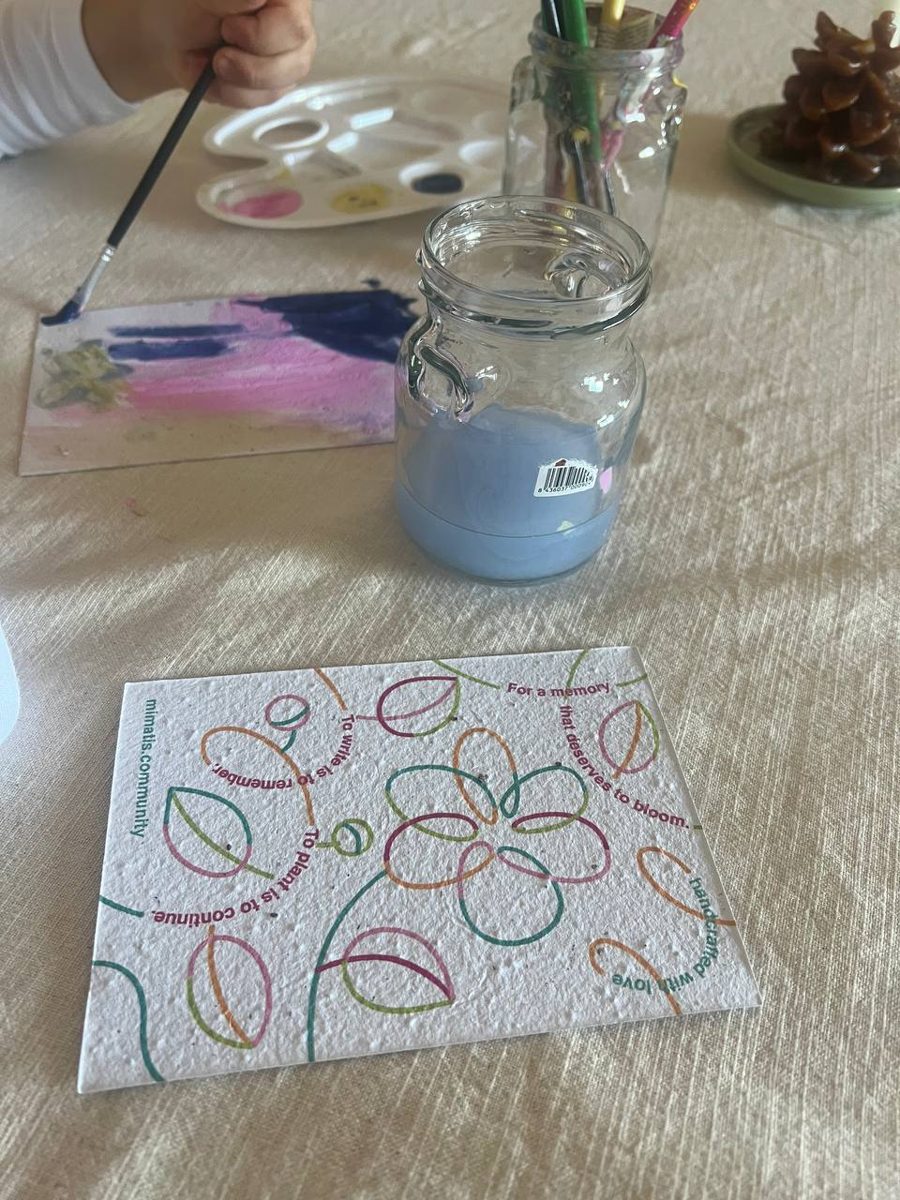
- Younger children can draw or paint. Colours, shapes, a picture of the family. There is no right way to do it.
- Plant it together. Let the child choose the place, cover the letter with soil and do the watering.
- Watch it grow. Checking for the first shoots gives a child a reason to return to the place and to talk about the baby, in their own time.
For many children, seeing flowers come up where they planted their letter is a way of understanding that love continues, even when someone has died. It is also something the whole family can share, each with their own letter.
Write, plant, remember
A seed letter is small. It asks for nothing more than a few words, a little soil and some patience. What it gives back is a place to return to, and flowers that bring life to a day that may otherwise be hard.
If you would like to know more about MIMATIS seed letters, or would like some for your family or your hospital, write to us at contact@mimatis.org.