
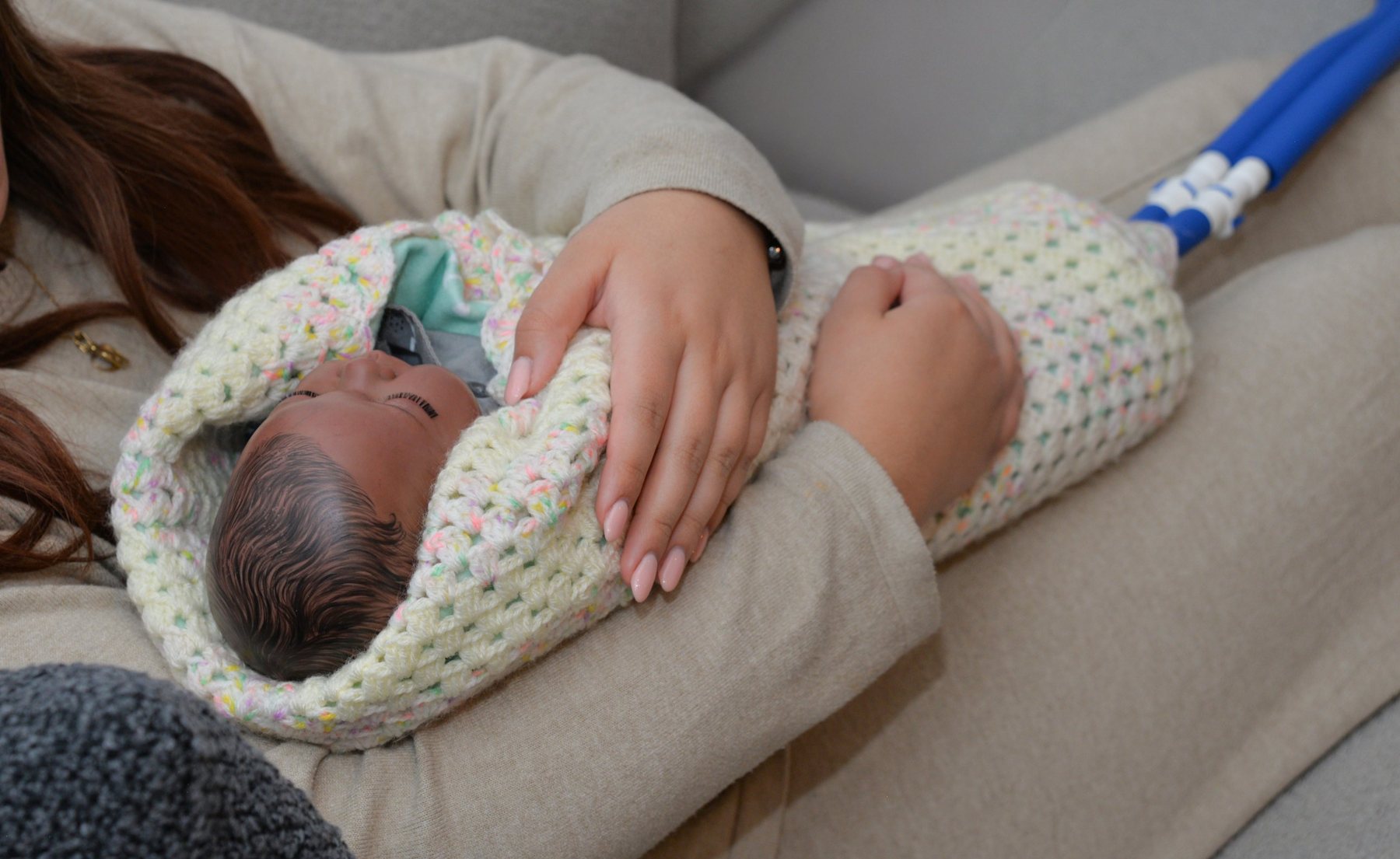
When a baby dies, parents often have very little time with them. Many parents later say the same thing: they wish they had had more time.
A cooling cot can change that. It gently keeps a baby cool, so that parents can stay with their baby for longer: to hold them, look at them, introduce them to the people they love, and say goodbye in their own way.
Victoria’s story
When Victoria, the founder of MIMATIS, lost her daughter Maya in 2022 in the Netherlands, there was no cooling cot. Maya was kept in a plastic basket with cool water.
“It was not the worst experience, but it created a different kind of memory.”
Why time matters
After a baby dies, there is no second chance for the first days. The time parents spend with their baby becomes the memories they keep for the rest of their lives.
With time, parents can:
- hold and cuddle their baby
- bathe and dress their baby
- take photographs, and hand and foot prints
- introduce their baby to brothers and sisters, grandparents and friends
- say goodbye at their own pace, and make arrangements without feeling hurried
Not every parent wants the same thing, and that is all right. What matters is that every family knows the choice exists. Our research page explains what studies say about seeing and holding a baby who has died: there is no right or wrong choice, and mothers who held their baby were consistently glad they did.
What a cooling cot is
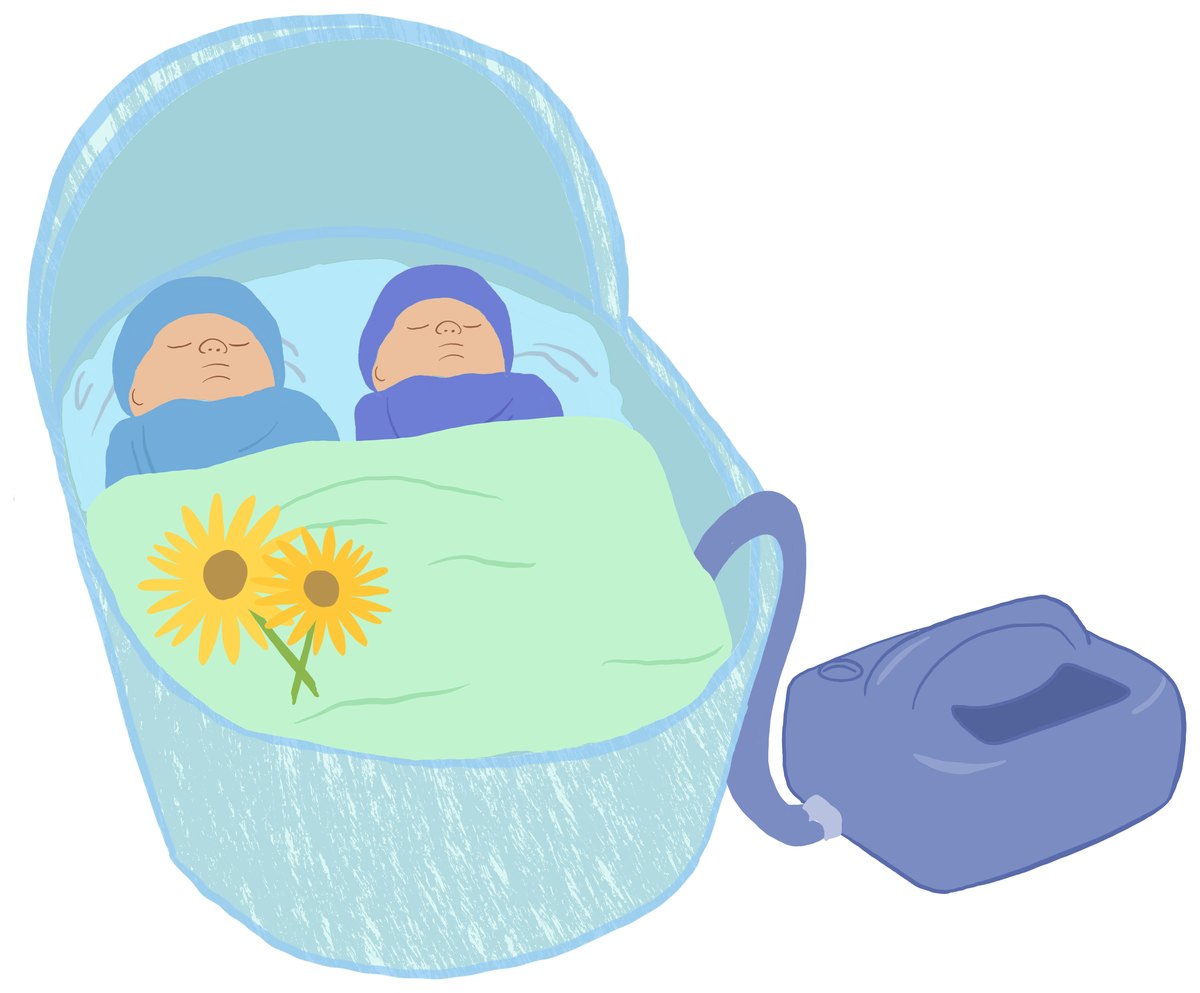
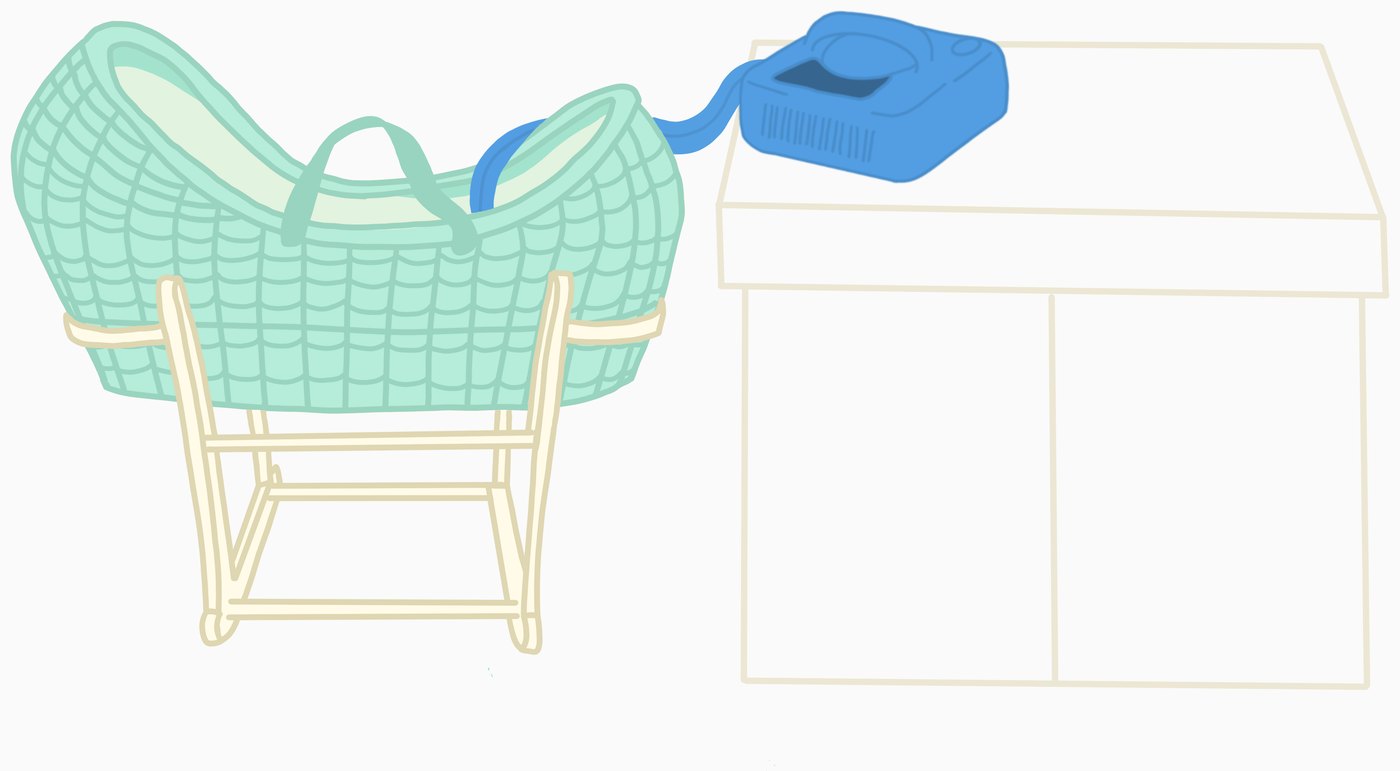
The best-known cooling cot is the CuddleCot, made by Flexmort in the United Kingdom. It is a quiet cooling unit connected to a soft, thin pad. The pad lies hidden under the blanket in an ordinary hospital cot or Moses basket.
The pad gently cools the baby, so that the natural changes after death happen more slowly. It is cool enough to protect the baby, but not so cold that parents cannot hold them. The baby can be wrapped together with the pad and a blanket and lifted into a parent’s arms, then laid back in the cot.
According to CuddleCot:
- there are pads for babies born early and for babies born at full term
- it uses no ice packs or harmful chemicals, and every part is reusable
- it can be used in the delivery room, on the maternity ward, in neonatal intensive care, or in a family room, wherever the family feels most comfortable
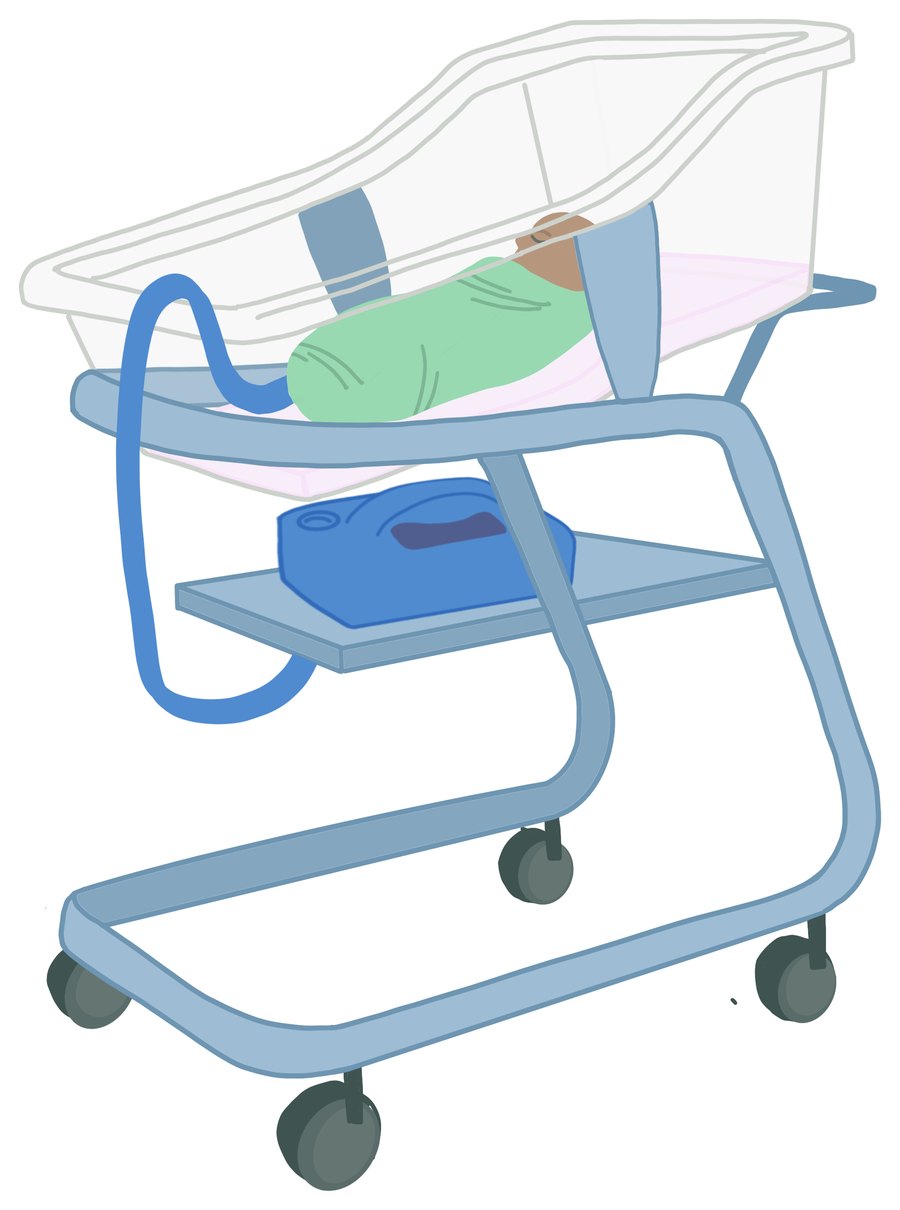
Because the cot stays in the room, parents can pick up their baby as often as they want, and family and friends can come and meet the baby with less sense of urgency.
Without a cooling cot
In hospitals without a cooling cot, a baby may need to be taken to the hospital mortuary to be kept cool, and brought back when parents ask to see them. Some hospitals use a cold cot, a refrigerated cot. Parents can still see their baby, but taking the baby out to hold them can affect the baby’s temperature, so holding time is often shorter.
Parents who used a cooling cot often describe something simple: they could decide. One family, whose words are shared by the Australian charity Bears of Hope, said that deciding themselves when their son went to the funeral home was “a small but incredibly powerful thing”.
How long can it be used?
It depends on the baby, the family and the hospital. Your health and safety come first, and your baby’s care is guided by the medical team. Ask them how much time is possible for you, and whether you can keep your baby in your room.
In some countries, families can take a cooling cot home before the funeral. Rules differ from country to country, so ask your hospital and funeral home what is possible where you live.
Questions to ask your hospital
- Do you have a cooling cot, such as a CuddleCot?
- Can my baby stay with us in our room?
- How much time can we have together?
- Can our other children, parents or friends come to meet our baby?
- Can we bathe and dress our baby, take photographs and make prints?
- Can we take our baby home before the funeral?
If the answer is no, you can still ask for photographs, hand and foot prints, and as much time as the hospital can give.
Cooling cots in Spain
In Spain, CuddleCot is distributed by Tacklen, based in Terrassa. Tacklen told us that in the Madrid region, the CuddleCot has been included in the protocols of the regional health service (SERMAS), and that practically all public hospitals there now have one. MIMATIS is working with Tacklen and CuddleCot to help more hospitals in Catalonia and the rest of Spain offer families this time.
For hospitals and health professionals
CuddleCot offers free online training for staff, and a bereavement care toolkit. To learn more, visit cuddlecot.com. If your hospital would like to work with MIMATIS, write to us at contact@mimatis.org.
You can read stories from families who used a CuddleCot on the CuddleCot website, and follow them on Instagram at @cuddlecot_.
This is not advertising: MIMATIS receives no payment from CuddleCot or Tacklen. We share it because we believe every family deserves time with their baby. Images: CuddleCot. The photograph shows a doll.
Sources
(6)
- CuddleCot, information leaflets for hospitals (Spanish), sent to MIMATIS by Flexmort, October 2026; cuddlecot.com
- MAMA Academy: The CuddleCot, information for parents
- Lamaze International: What is a CuddleCot? Support for grieving infant loss
- Bears of Hope: Cuddle Cots
- MIMATIS research page: should we see and hold our baby?
- Tacklen Medical Technology (CuddleCot distributor in Spain), email to MIMATIS, 14 October 2026